
If you’re considering getting a website for your business, one of the first questions you’ll probably ask is:
How much does a business website cost?
The answer can vary significantly. A simple business website can cost a few hundred dollars, while a more customized website or web application can cost several thousand dollars or more.

The reason for this wide price range is simple: not all websites are built for the same purpose.
A five-page website for a local service business is very different from an online store, booking platform, or custom web application.
In this guide, we’ll look at the typical costs of a business website, what affects the price, what ongoing expenses you should consider, and how to determine what kind of website your business actually needs.
How Much Does a Business Website Cost?
As a general guideline, you can expect the following price ranges:
| Website type | Typical cost |
|---|---|
| DIY website | $100–600+ |
| Simple professional business website | $600–3,000+ |
| Customized business website | $2,500–8,000+ |
| Large or highly customized website | $8,000–20,000+ |
| Custom web application | $10,000+ |
These numbers are only rough guidelines. The actual cost depends on the scope of the project, the functionality required, the amount of content, the design, and who builds the website.
For many small businesses, there is no reason to spend tens of thousands of dollars on a website.
On the other hand, choosing the cheapest possible option isn’t always the best decision either.
The goal should be to find a solution that provides the functionality, quality and support your business actually needs.
Need a new website but don’t know what your project should cost?
We can look at your requirements and provide a quote based on the actual scope of your project.
What Determines the Cost of a Business Website?
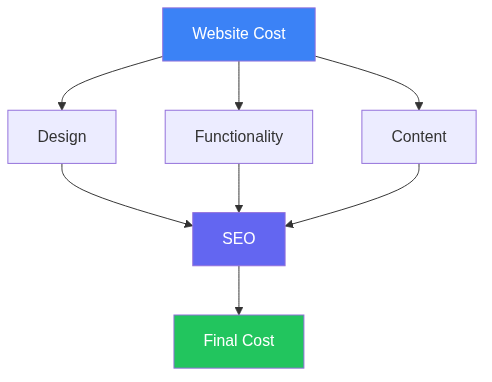
Several factors can affect the final price of a website.
Understanding these factors makes it easier to compare different quotes and avoid unexpected costs.
1. Number of Pages
A website with five pages requires considerably less work than one with 30 or 50 pages.
A small business might only need:
- Home
- About
- Services
- Contact
- Privacy Policy
Another company might need separate pages for multiple services, locations, products, team members, case studies and other content.
More pages generally mean more work in design, development, content creation and SEO.
However, more pages don’t automatically mean a better website.
A smaller website with clear and useful information can be more effective than a large website filled with unnecessary content.
2. Website Design
Design is another important factor.
You can build a website using an existing theme or template and customize it to match your business.
Alternatively, you can create a completely custom design from scratch.
A template-based approach can reduce development time and cost, while a custom design provides more control over the appearance and user experience.
For many small businesses, a professionally customized WordPress theme is more than enough.
A custom design becomes more valuable when your business has specific branding requirements or when the website needs a unique user experience.
3. Functionality
The more your website needs to do, the more development work it may require.
A basic business website might only need a contact form.
Other websites might require:
- Online booking
- E-commerce
- Online payments
- Customer accounts
- Advanced contact forms
- Calculators
- Membership systems
- CRM integrations
- Third-party APIs
- Custom dashboards
- Automated processes
For example, there is a major difference between a website that simply displays your services and a website that allows customers to book an appointment, make a payment and manage their account.
4. Content
Someone also needs to create the content for your website.
This can include:
- Text
- Images
- Videos
- Service descriptions
- Product information
- Testimonials
- Blog articles
- Translations
If you already have the content prepared, you can often reduce the amount of work involved in the project.
If your developer or agency needs to create everything from scratch, content production will naturally increase the cost.
5. SEO
A website is much more valuable when potential customers can actually find it.
Basic SEO work can include:
- Page titles
- Meta descriptions
- Heading structure
- Search-friendly URLs
- Image alt text
- Internal links
- XML sitemap
- Mobile optimization
- Technical SEO
More advanced SEO is usually an ongoing process rather than something that is completed once when the website launches.
For businesses that depend heavily on Google traffic, SEO should be considered when planning the website from the beginning.
How Much Does a Simple Business Website Cost?
A simple professional business website can often cost from several hundred to a few thousand dollars, depending on the provider and project requirements.
A typical small-business website might include:
- 3–7 pages
- Responsive design
- Contact form
- Basic SEO setup
- Business information
- Services
- About section
- Mobile optimization
- Domain and hosting setup
This type of website can be perfectly suitable for many businesses.
For example, a local:
- Plumber
- Electrician
- Restaurant
- Photographer
- Consultant
- Hairdresser
- Construction company
- Cleaning company
may not need complex custom software.
They need a website that clearly communicates who they are, what they offer and how customers can contact them.
How Much Does a Professional Business Website Cost?
A more customized professional website might cost $2,500–8,000 or more.
At this level, the project might include:
- Custom or heavily customized design
- More pages
- Advanced SEO
- Professional copywriting
- Custom functionality
- Third-party integrations
- Conversion optimization
- Analytics
- More extensive testing
- Ongoing support
The important thing to understand is that the price isn’t simply determined by how the website looks.
Two websites can look relatively similar while requiring completely different amounts of development work behind the scenes.
A website with custom functionality, integrations and automated processes can require significantly more development than a visually similar brochure website.
Not sure what level of website your business needs?
You don’t need to know exactly what technology or functionality you need before requesting a quote. Describe what you want the website to achieve, and we can help determine a suitable approach.
What About Custom Websites and Web Applications?
Some businesses need more than a traditional company website.
They may need a custom system or web application designed around their specific processes.
Examples include:
- Customer portals
- Internal business tools
- Booking platforms
- Management systems
- Data dashboards
- Custom calculators
- Automated workflows
- API-based services
- SaaS applications
These projects can cost several thousand dollars to tens of thousands of dollars or more, depending on their complexity.
The difference is that you’re no longer simply building a website.
You’re developing a software solution.
For a business with a specific technical problem, custom development can therefore provide much more value than trying to force an existing website platform to do something it wasn’t designed to do.
DIY vs. Hiring a Professional
Another major factor in website cost is who builds the website.
Building the website yourself
Website builders and content management systems make it possible to create a website without hiring a developer.
This can keep your financial costs relatively low.
However, you will need to spend your own time on things such as:
- Design
- Content
- SEO
- Updates
- Troubleshooting
- Security
- Forms
- Performance
- Integrations
A DIY website may cost less money, but your time has value too.
If you’re spending dozens of hours trying to fix technical problems instead of running your business, the cheaper option may not actually be cheaper.
| DIY | Professional | |
|---|---|---|
| Initial cost | Lower | Higher |
| Your time | Higher | Lower |
| Technical expertise | You handle it | Developer handles it |
| Customization | Varies | More flexibility |
| Troubleshooting | Your responsibility | Support available |
| Maintenance | Usually yourself | Can be outsourced |
Hiring a freelancer or small development company
For many small businesses, a freelancer or small web development company can be a good middle ground.
You can get professional help without necessarily paying the overhead associated with a large agency.
This can work particularly well for:
- Small businesses
- Local businesses
- Consultants
- Freelancers
- Startups
- Service businesses
You can also hire a developer for a specific problem instead of replacing your entire website.
For example, if your WordPress contact form suddenly stops working, you may simply need the problem diagnosed and fixed.
You don’t necessarily need a completely new website.
Hiring an agency
Agencies can be a good choice for larger projects where you need multiple specialists, extensive branding, UX strategy, content creation or complex development.
However, not every business needs an agency.
The best choice depends on the size and requirements of your project.
Don’t Forget the Ongoing Costs
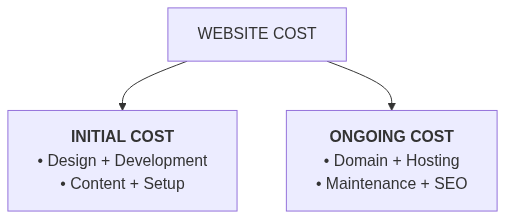
The initial development price isn’t necessarily the total cost of owning a website.
There can also be ongoing expenses.
Domain
Your domain is your website address, such as:
yourbusiness.com
Domains are generally relatively inexpensive compared with the cost of developing a website, but they need to be renewed periodically.
Hosting
Web hosting is where your website’s files and database are stored.
Basic websites can usually use relatively inexpensive hosting, while larger or more demanding websites may require more powerful infrastructure.
Maintenance
Websites need maintenance after they launch.
For WordPress websites, this can include:
- WordPress updates
- Plugin updates
- Backups
- Security monitoring
- Performance checks
- Troubleshooting
- Small content changes
Some businesses handle this themselves.
Others prefer to pay a developer or maintenance provider to take care of it.
SEO and Marketing
Launching a website doesn’t automatically bring visitors.
You may also want to invest in:
- SEO
- Google Ads
- Social media
- Content marketing
- Email marketing
- Local SEO
These costs are separate from the initial website development.
How to Keep Your Website Cost Under Control
Getting a good website doesn’t necessarily mean spending as much money as possible.
There are several ways to keep the project focused.
Start with the essentials
Ask:
What does my customer actually need from this website?
If the goal is to generate leads, you may not need dozens of pages or complicated functionality.
A focused website can be more effective than an unnecessarily complex one.
Avoid unnecessary features
Every additional feature introduces more development and maintenance.
Before adding something, ask:
Does this actually help my customers or my business?
If the answer is no, you probably don’t need it.
Provide existing content
If you already have your:
- Logo
- Photos
- Service descriptions
- Brand guidelines
- Testimonials
- Other business information
providing these materials to your developer can reduce the amount of work required.
Plan the project before development starts
Changing the scope halfway through development can increase costs.
Before starting, try to establish:
- What pages you need
- What functionality you need
- What content you have
- What your website should achieve
- What your budget is
A clear scope makes it much easier to receive an accurate quote.
What Should You Ask Before Accepting a Website Quote?
Don’t compare web developers based solely on the final price.
Make sure you understand what you’re actually getting.
For example, ask:
Is hosting included?
Is the domain included?
Who owns the website?
Can I edit the content myself?
Is the website mobile-friendly?
Is basic SEO included?
Are contact forms included?
How many revisions are included?
What happens if something breaks after launch?
Are future changes charged separately?
Is maintenance included?
Two websites can have the same price while providing very different levels of service.
A $2,000 website that includes everything you need may ultimately be a better investment than a $1,000 website where every additional change costs extra.
Looking for a straightforward website quote?
Tell us what you need, what you already have, and what you’d like your website to achieve. We’ll use that information to determine what kind of solution would make sense for your business.
Do You Need a Cheap Website or a Custom Solution?
There isn’t one answer that works for every business.
If you’re a small business that simply needs a professional online presence, a well-built WordPress website may be more than enough.
If you need specialized functionality that existing tools cannot provide, custom development may make more sense.
The important question isn’t:
“How much does a website cost?”
Instead, ask:
“What does my business actually need the website to do?”
Once you know the answer, it becomes much easier to determine a reasonable budget.
Final Thoughts
So, how much does a business website cost?
The answer can range from a few hundred dollars to tens of thousands, depending on the project.
A simple business website may be relatively inexpensive, while a highly customized website or web application can require a much larger investment.
The right budget depends on:
- The size of the website
- Design requirements
- Functionality
- Content
- SEO requirements
- Integrations
- Ongoing maintenance
- The complexity of the project
The cheapest website isn’t necessarily the best option, and the most expensive website isn’t necessarily the best option either.
The goal is to build the right website for your business.
A good business website should make it easy for potential customers to understand what you offer, trust your business and take the next step.
One Response